


In Margate, at least, they appear to have been gathered and assorted onto the walls of one of Britain’s most enigmatic subterranean chambers.
Beneath an unassuming stretch of residential road in Kent lies the Margate Shell Grotto, a winding underground passageway featuring roughly 2000 square feet of mosaic decoration across corridors and vaulted ceilings.
Adorned with an estimated 4.6 million shells arranged into dense mosaics of geometric panels, radiating suns, hearts, arches, and abstract emblems, the site has sparked curiosity ever since it was reportedly ‘rediscovered’ in 1835 when landowner James Newlove and his son Joshua uncovered a chalk void while working on the grounds to dig a duck pond.
The Cave with a Million Shells
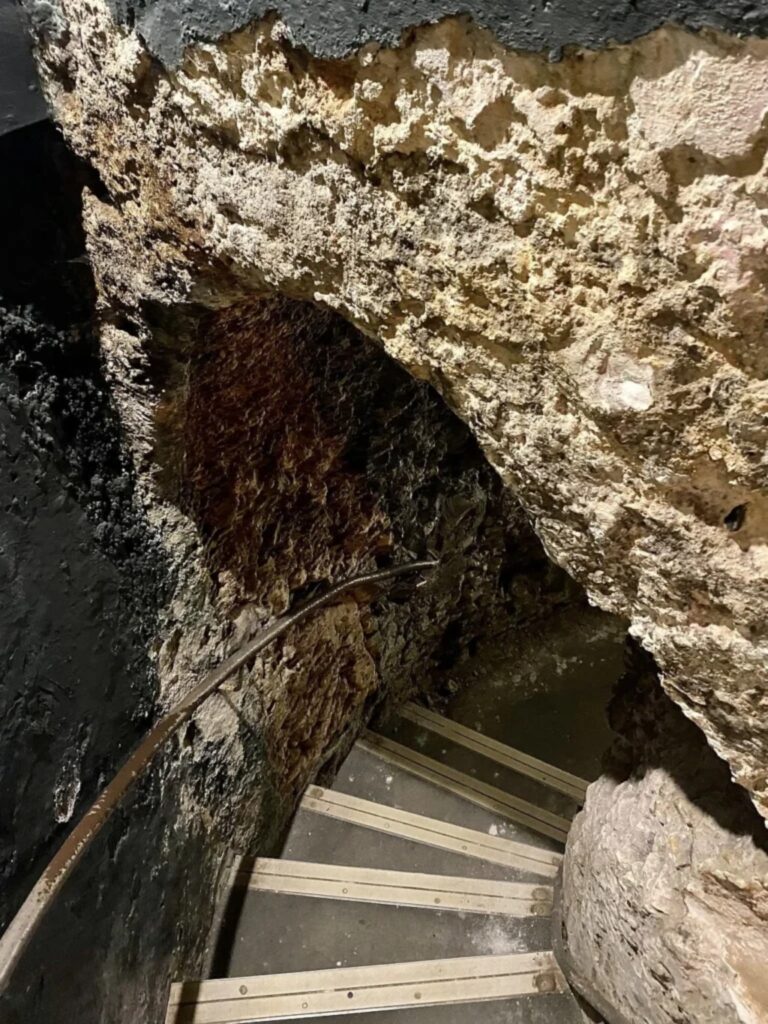
Descending the narrow staircase from street level, one leaves the mild suburban tumult of Margate behind and steps into a cooler, dimmer, and faintly saline atmosphere, offering a stark contrast to the dry air outside.
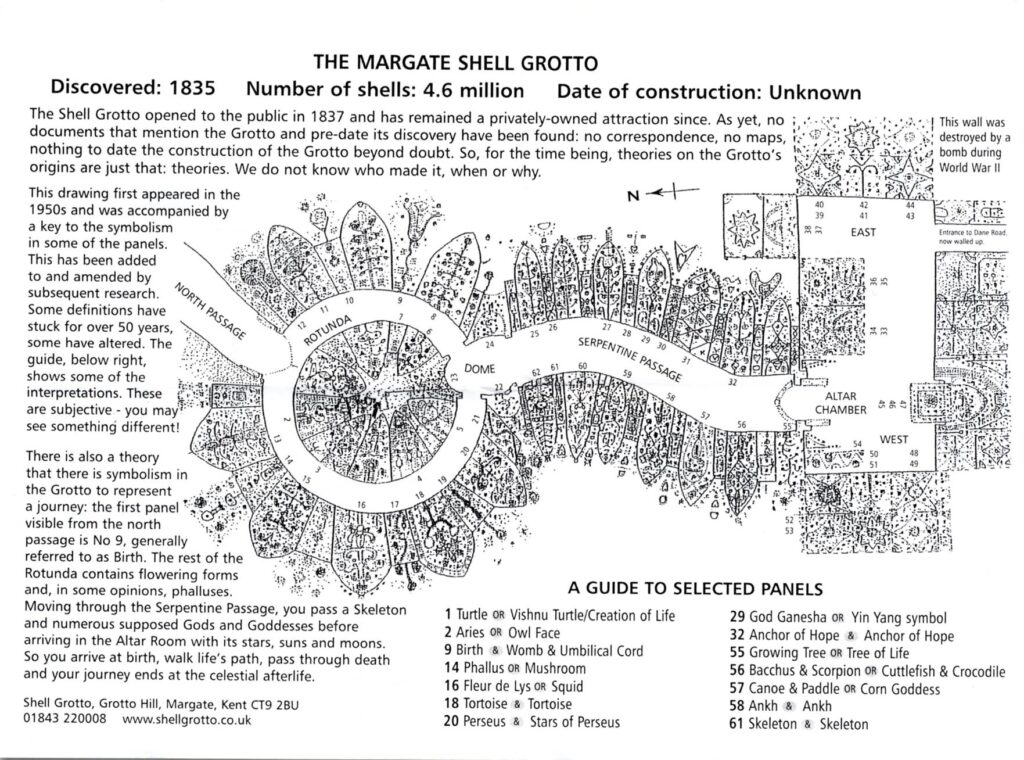
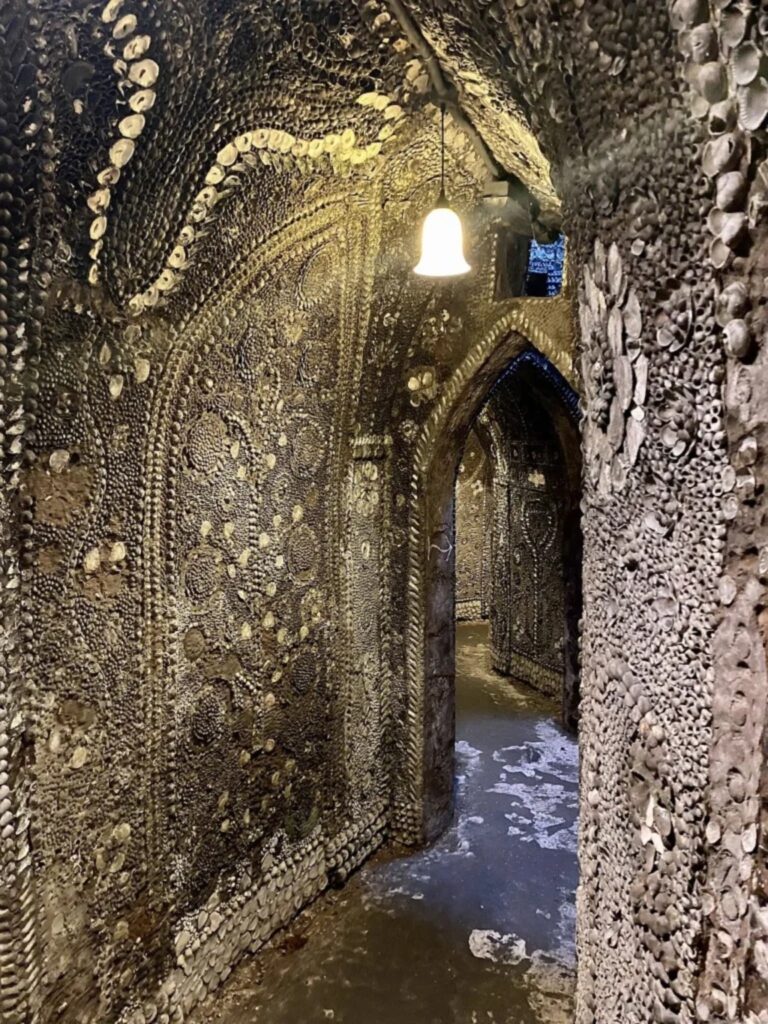
The Shell Grotto appears to have been designed as a sequence of connected spaces carved into the chalk beneath the town. The structure extends roughly 21 metres (about 70 feet) and comprises a winding passage, a rotunda, an altar-like chamber, and a narrow, serpentine corridor that gradually reveals a distinct decorative pattern.
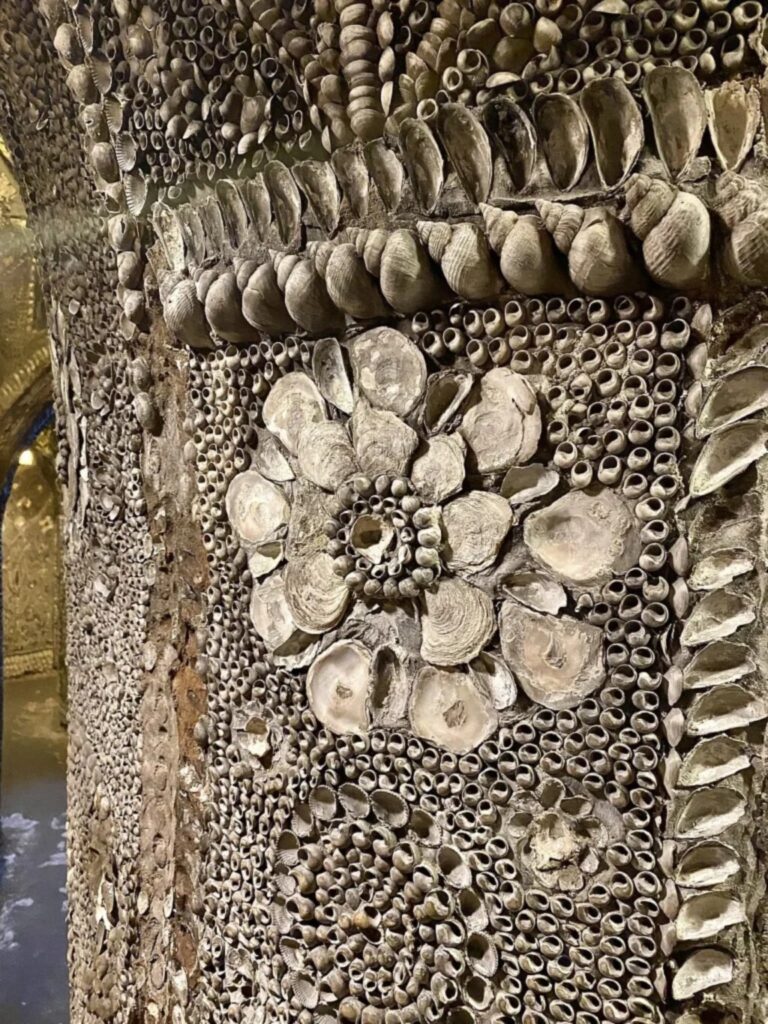
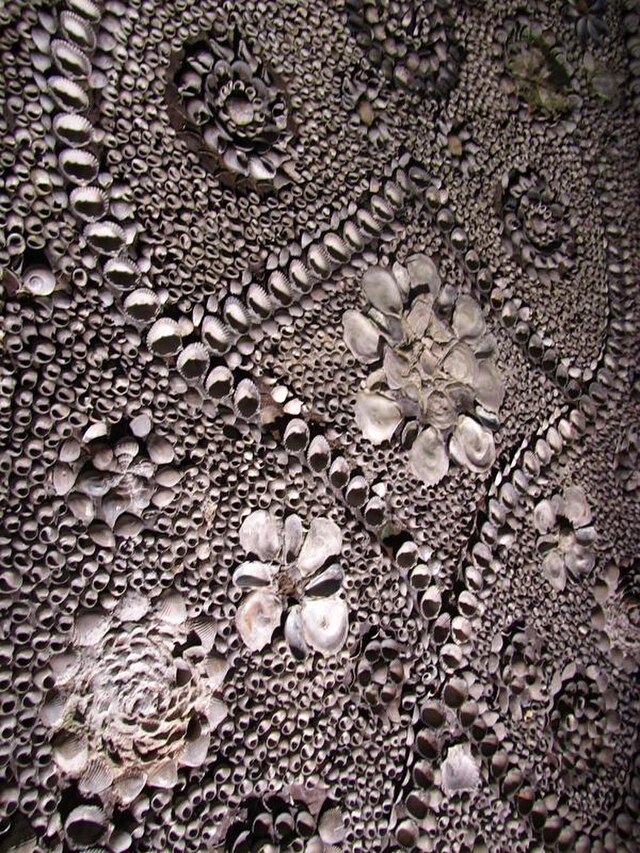
The walls and ceilings of the cave are almost totally encrusted in shells. An estimated 4.6 million of them, consisting of cockles, mussels, whelks, limpets, and scallops, are pressed into mortar and arranged into dense mosaics covering approximately 2000 square feet of surface.
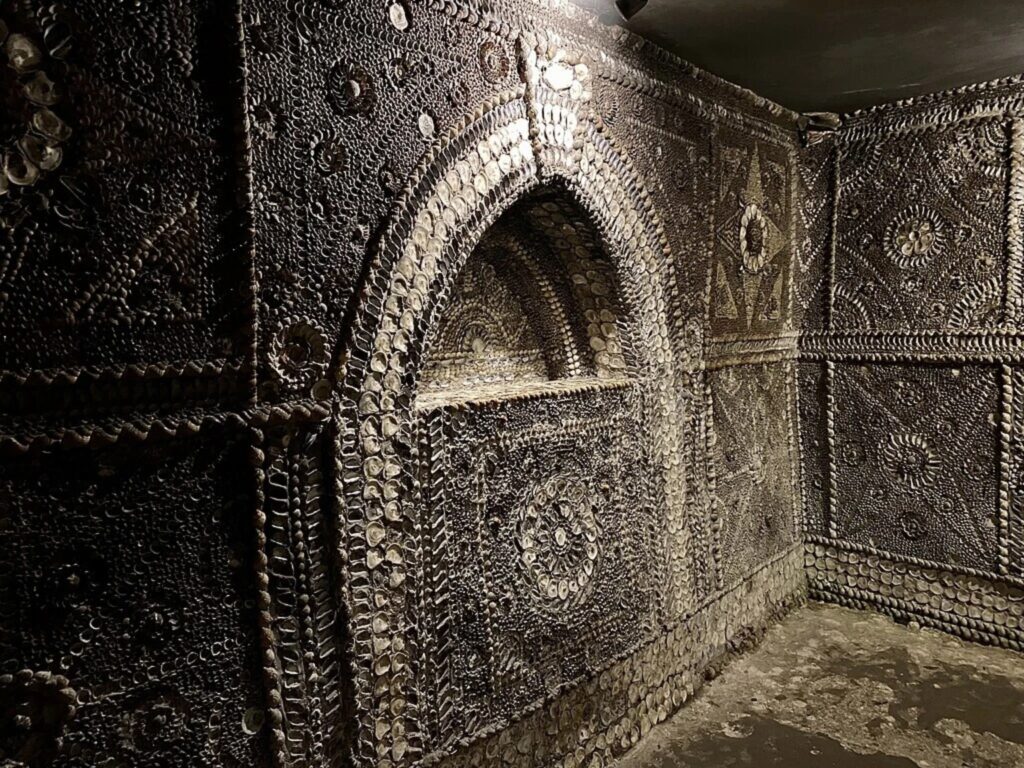
The ceiling of this grotto is quite a bit different from that of other grottos spread across England. The ceiling is gently vaulted, with the walls almost entirely packed with tightly arranged shell mosaics along the chalk structure’s curvature. Darker shells, particularly mussels, are frequently used to create dense fields against lighter cockles and scallops, demarcating linear borders while maintaining radial forms and lattice-like compositions.
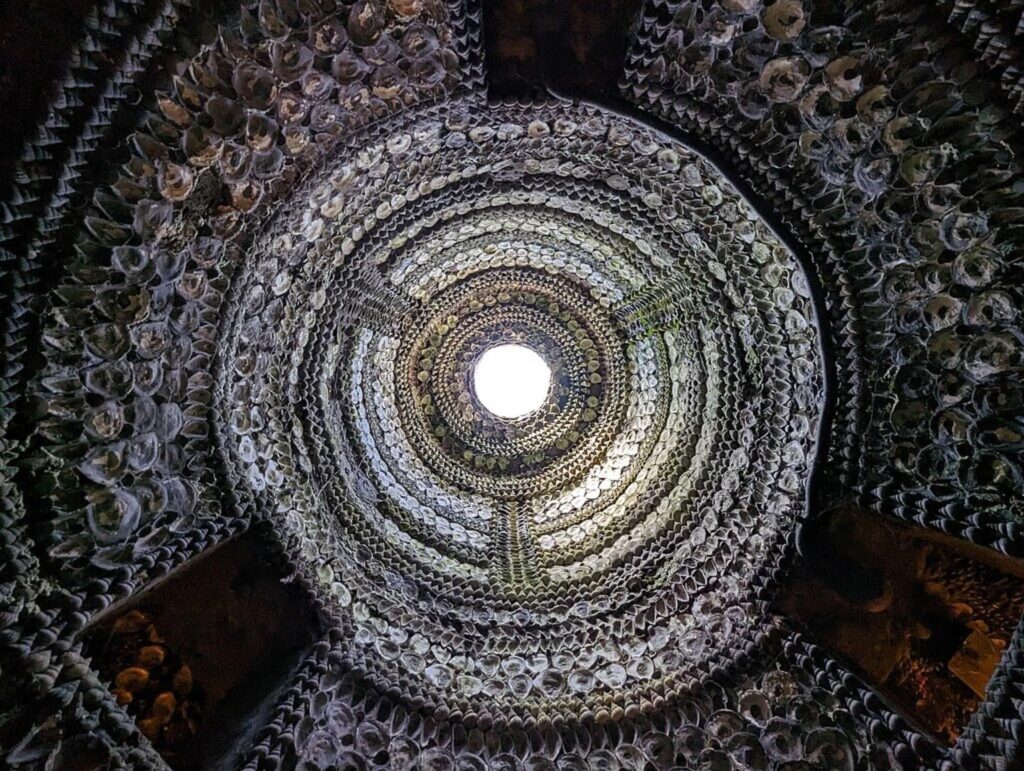
Funnily enough, the domed appearance of the ceiling has attracted speculation that there may have been Roman, Byzantine, or even Islamic influence in its construction, while others point to the Gothic Revival of the Victorian era. The reason behind the roof’s shape, however, is totally architectural. Underground, a flat roof would’ve collapsed entirely, while the domed structure provided structural integrity.
The surfaces shimmer under artificial lighting, with the nacreous interiors of shells often catching illumination in soft flashes of grey, white, and muted ochre.
Interestingly, the shells appear to be glued to the surface (rather than pressed in by sheer pressure), and that adhesive record has proven surprisingly informative.
In a 2009 condition survey, conservators took five small samples of the substance holding the shells in place, and, surprisingly, the results were not entirely homogeneous. While some areas of the walls reportedly used lime mortar, other portions included what the researchers called “Roman cement type” binder.
Additionally, the survey noted that small slats (likely mosaicked on the ground before being set into the grotto) are bonded with plaster of Paris, a material that has visibly not weathered well, leaving bare patches where it has deteriorated.
These results suggest a complex construction process, likely involving the assembly of materials outside the cave and their installation using multiple binders.
Historic England and local studies note that the “flat winkle” shells used extensively in the infill are rather rare on local beaches, suggesting that at least some of the material was transported from further along the coast (possibly west of Southampton).
Several of the shells had been previously arranged in the form of medallions, but today, over a hundred of these are lost to the prying hands of visitors, who conveniently took off with what they would’ve called ‘souvenirs’.
Unfortunately, the documents with graphics of the original decorations were lost during the relocation of the Margate library, so one can never be entirely sure of the original contents of the cave.
The result of the 1835 discovery
Entrepreneurial as he was, Newlove had opened the Grotto to the public by 1837-1838, complete with gas lighting and stairways, making it one of the earliest commercially exhibited historic attractions in Victorian England.
Coincidentally, this swift commercialisation of a place that was supposed to be completely unknown has raised quite a few eyebrows in the modern day. Victorian appetite for novelty and the undeniable profitability of exhibiting curiosities during the period have led to a common claim (though entirely unproven) that it may even have been constructed in the late 18th or early 19th century and then “rediscovered” as a tourist attraction, perhaps by Newlove himself. The sheer labour involved in embedding millions of shells, however, makes it difficult to accept the idea of a simple hoax.
Ever since its discovery, the site has remained a Grade I listed historic monument in England, recognised for its cultural significance even as its age and purpose remain unresolved.
Architecture and motifs: What the grotto shows (and what it doesn’t)
A careful glance through photographs and a walk through the cramped, damp rooms, if one can, produces two immediate impressions in an observer.
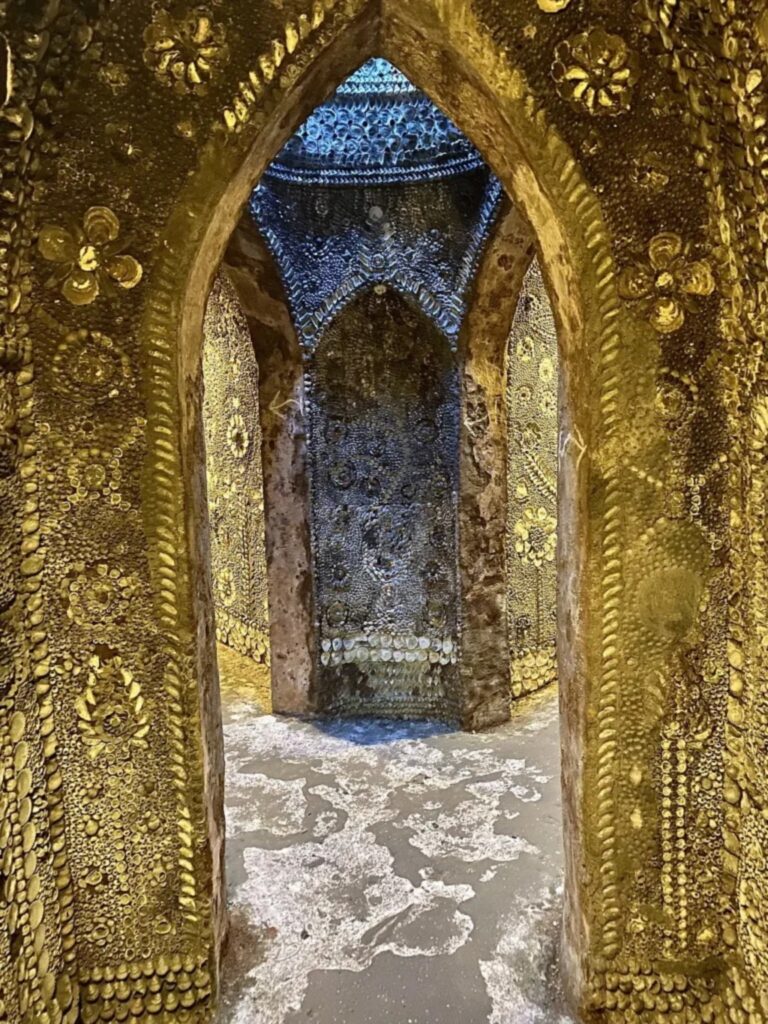
Firstly, the grotto appears exceedingly meticulous in its composition. The shells adorning it are not scattered haphazardly (as one might expect in a natural structure), but are laid into repeated patterns which include radial suns, lozenges, hearts, and friezes, all in a strikingly tasteful manner that invites comparisons with traditional motifs, rather than what one might simply call ‘Victorian whim’. Some observers even liken the patterns to the panelled decorative schemes of restored Roman villas or classical mosaics.
Secondly, the structure’s iconography feels oddly Catholic, unlike many British shell grottos, where Rococo and Baroque putti and other Christian references are frequently present. Traditional Baroque motifs (cherubs flanking a disk, abundant vegetal scrolls) are conspicuously absent from the grotto’s dominant registers; instead, one finds geometric devices, stylised arches (some with a vaguely Gothic outline), stylised suns, and ambiguous emblems.
Interestingly, locals (including the owner himself, apparently) claim that the altar was X-rayed and that a turtle is buried behind it. Local folklore (although totally unsubstantiated) claims that the grotto is also linked to the local smuggling caves, while others swear upon a Mother Goddess in the cave, all of which makes one question its actual purpose and, more importantly, who built it?
The three broad families of theories:
In the absence of any concrete (pun intended) evidence of the grotto’s origin, three broad strings of theories claim to solve this mystery.
The Altar Theory: The fact that the cave was used as a place of worship seems obvious to observers, although it cannot be substantiated. The grotto’s hallway ends in an altar, whose roundabout might have been fairly important. In several World Religions, running or walking in concentric circles around a fixed structure is a common form of worship. The ‘whirling’ Dervishes dance endless laps in the worship of God, while Muslims walk seven rounds during their Hajj around the sacred stone of the Kaaba in Mecca to be elevated. Christianity and Hinduism, too, have similar traditions. Was the roundabout in the cave, then, also walked around as a way of getting in touch with a higher power?
Several historians have tried to establish this link, notably Mick Twyman of the Margate Historical Society, who thinks the grotto might have been built in the 12th century and may even be linked to certain Temple Knights or the Mayan Civilisation.
The Folly Theory: 18th and early 19th-century England was the epitome of opulence. Scattered across the English countryside were opulent structures with no other purpose than decoration and displaying wealth to the outside world, and it was not exactly uncommon for the moneyed owners of landscaped estates to sometimes invest in shell-lined grotto pavilions across their garden path, or as a decorative feature to their house (Shell House in Dublin, Ireland, for instance).
Thus, the theory that this was either a private folly or an intensively concealed decorative piece of work (possibly the product of skilled local craftsmen working upon the commission of a patron) cannot be entirely dismissed.
The principal objection to this theory, however, is the absolute lack of a paper trail. Logically, if an aristocrat or wealthy patron commissioned such an elaborate interior, why would there be no estate record?
Rituals, secret societies, or smuggling narratives: A porous amalgamation of ideas suggests that the grotto was built for private ritual use (be it masonic, esoteric, or pagan revival) or as a clandestine meeting place for smugglers. The smuggling idea has local appeal, with Kent’s coast having a long history of contraband trade, but it contradicts the region’s geography. The grotto sits some distance from the open shoreline, and there is no clear documentary evidence of subterranean tunnels leading directly to landing sites. More importantly, I’m sure the modern reader can agree that Victorian smugglers would perhaps not want to express their penchant for subterranean art at their meeting cave, of all places (which would make it much more conspicuous).
From what one has read so far, it is understood that the precise absence of uncontested dating and undisturbed context keeps the speculation of the cave alive (and the business of its tourism, very successful). This logically raises the question: why not simply carbon-date shells?
Why not carbon date the shells?
A tempting modern-day fix, as it may seem, carbon dating presents its own set of problems. Two technical problems impede the process at the very beginning.
Firstly, dating the carbonate in a shell tells you simply when the organism lived, not when a human artisan decided to glue the shell to a wall. Shells can be collected as older beach debris, collected from midden deposits, or transported over long distances and stored for years before use. Thus, even if perfect radiocarbon dating were possible, one must still (perhaps very inaccurately) infer the interval between the organism’s death and the actual use of the shell.
Second, shells are marine carbonates and are thus subject to the marine reservoir effect. Marine organisms draw carbon partially from older dissolved inorganic carbon in the ocean, which makes their apparent radiocarbon ages offset (often by centuries) from their actual ages. Although correcting these offsets is possible, it would require a huge amount of sample data to examine, and collecting large samples would visibly distort large portions of the walls.
Conservation, Commerce and the Tourist Trap
Not yet having the privilege of coming directly under the Crown’s tutelage, the grotto has remained in private hands ever since its discovery in 1835. The grotto remained a cornerstone of the Newlove family’s tourist attraction, drawing a steady crowd over the years.
However, due to circumstances unknown (and understandably regrettable), the grotto had to change hands in 1932, almost a century later, as it went on to be auctioned, with archival records from the auction referring to it as “wonderful catacombs illuminated with incandescent gas,” into the hands of a ‘new owner’.
This individual took it upon themselves to restore the grotto to its former glory, replacing the old gas lighting (which had left a sooty sediment upon the upper walls) with electric lights and cleaning the sedimented soot.
A couple of years down the line, the grotto suffered the misfortune of being hit by Luftwaffe raids, with its outer wall sustaining significant damage from enemy bombs and later requiring restorative work.
Interestingly, this event, decades later, cemented its wartime impact and was part of the reasoning for granting the grotto Grade I listed status in 1973, recognising it not just as a site of artistic and historical importance but also as one marked by the experience of modern conflict.
Friends of the Shell Grotto and Recent Stewardship
In 2008, a not-for-profit trust called Friends of the Shell Grotto was established to promote, conserve and preserve the site over the long term. Ever since, the group has been integral in organising several conservation initiatives, community outreach, and fundraising partnerships with Historic England and other heritage bodies, to maintain and secure the Shell Grotto.
Notably, between 2007 and 2012, a significant restoration program removed it from the Heritage at Risk Register after its years of water damage and structural stress were finally resolved. A sponsorship program, the Roundel Project, funded the replacement and consolidation of certain mosaic panels, and the artisans who worked on them were subsequently nominated for heritage awards in recognition of the meticulous work undertaken at this unusual heritage site.
The Present-day Status
Because it has always been privately owned, no public archive of the grotto’s restoration or construction records remains. Nor have any estate correspondence or building contracts surfaced to firmly date the shellwork or create a timeline of its restorations.
Today, it continues to attract significant footfall, featuring a gift shop and a small museum room, with scheduled tours conducted at regular intervals. Historic England retains regulatory oversight by virtue of the listing, and the Friends trust continues to advocate for its preservation and protection, and to invite interpretative efforts that might help unearth (for the lack of a better word) its origins.
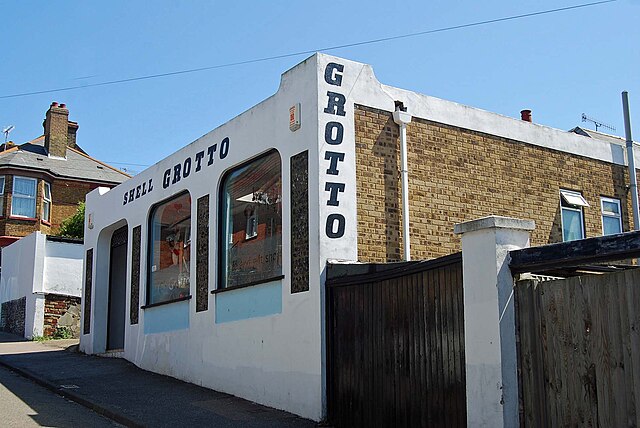
Certain locals, however, seem to feel differently towards this structure. “I used to live on the same road as the grotto”, notes a Reddit user. “It’s broken and smells damp.. some of the artworks are interesting, but it always felt faux with its mishmash of designs. [There are] Lots of hearts and fairly modern representations in there as well.’ they note.
In the end, it feels oddly melancholy and even sobering to think of the many things that were once really important projects but are now just lost to time. The grotto almost certainly required significant work in its construction, with contributions from numerous people, all for a king or a religion or what have you.
What’s funny, however, is that, as important as it was to those folks at the time, the effort (months, or perhaps even years, of human work) is just lost under a duck pond, and we have no clue who made it or why.