

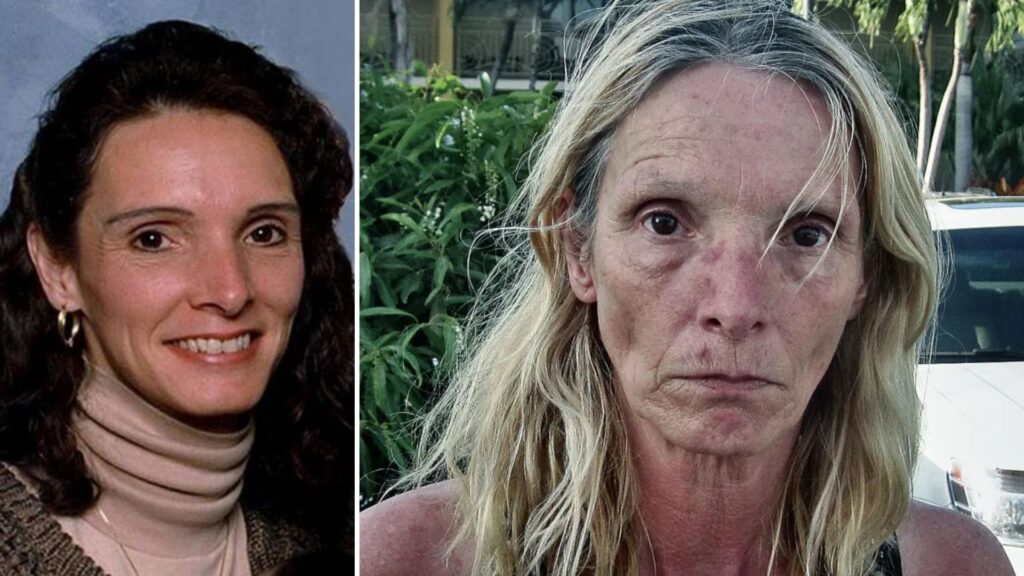
In February 2002, Brenda Heist left her small town life in Lititz, Pennsylvania, took her children to school, and quietly stepped out of the script. By that evening, she was gone, leaving behind a half finished load of laundry and defrosting food in the sink.
At the time she was 42, working at a car dealership and trying to sort out an amicable divorce from her husband, Lee. Their children, Morgan and Lee Jr, were eight and twelve, old enough to notice tension but still expecting both parents at home.
Her last morning started like any other Friday. She told the kids she would be at the grocery store later and that they could walk home from school. When they returned that afternoon, the dog was outside, the house was quiet, and their mother was nowhere.
Hours passed before Morgan called her father to say that something felt wrong. Lee came over, checked the familiar rooms, and saw all the signs of a day interrupted. Clothes mid cycle, dinner thawing, no bags packed, no note waiting on the table.
Police soon found Brenda’s car abandoned in a parking lot in nearby York. The vehicle offered no obvious answers. There were no signs of a struggle, no clear route, and no message about where she had gone or why.
What no one in Lititz knew was that shortly before she disappeared, Brenda had sat crying on a park bench after learning she had been denied public housing assistance. Three strangers, two women and a man, approached, listened to her talk about her problems, and suggested she leave with them.
In later interviews, she said a switch flipped in that moment. The strangers planned to hitchhike toward Florida, and she decided to go along. They drove her car to York, left it there, then moved on with backpacks and cardboard signs along Interstate 95.
Back in Pennsylvania, detectives opened a full missing person investigation. Friends and relatives insisted she would never abandon her children voluntarily. For police, that meant treating the case more like a suspected crime than a voluntary disappearance, at least at first.
Lee cooperated with investigators but felt the weight of suspicion. He later said that other parents did not let their children visit his house and that whispers followed him for years because people assumed a husband must be involved when a wife vanishes.
Morgan and her brother grew up inside that climate. They remembered the day their mother went missing in vivid detail, right down to the routine school drop off and the assumption that she was running errands. The shock never really faded, it just turned into a long waiting period.
Investigators kept the case open and periodically revisited old leads. Detective John Schofield, from Lititz Borough Police, worked it for years and said he always leaned toward the theory that Brenda had been killed. There were no bank withdrawals and no confirmed sightings.
By 2010, eight years after she disappeared, a judge declared Brenda legally dead. That allowed Lee to settle financial matters, including a life insurance policy, and helped the family achieve some administrative closure even though they still did not know what had happened.
The children moved into adulthood with that legal reality in place. Morgan went to college and tried to build a normal life. Her brother finished school and pursued a law enforcement career, influenced in part by his own experience inside a missing persons case.
During those same years, Brenda was alive in Florida, living under aliases and presenting herself as a different person. To police she later described years of hitchhiking, sleeping under bridges, and surviving on food from restaurant trash cans while travelling with drifters.
She said she avoided phones, computers, and any contact with her old life. Her explanation was that she believed her family was better off without her and that admitting she had walked away would be worse than letting them think she was dead.
That account of relentless homelessness did not match everything people in Florida remembered. Under the name Kelsie Lyanne Smith, she worked as a cleaner and sometimes lived with employers. One woman, Sondra Forrester, told reporters that Brenda stayed in her home, helped around the house, and came along on beach and fishing trips.
Forrester said Brenda presented herself as a widow with no children whose mother had died when she was young. That story attracted sympathy and, crucially, contained none of the facts about the family she had left in Pennsylvania.
At some point in Florida, Brenda got into legal trouble under her alias. She was charged with using someone else’s identification during a police traffic stop and giving a false name to law enforcement. She received probation, but the case planted a legal time bomb that would push her back into the spotlight later.
By early 2013, her situation had tightened. She said she was homeless again and exhausted. At the same time, authorities in Santa Rosa County, Florida, had issued a warrant because she had failed to report to her probation officer after leaving the Pensacola area.
On April 26, 2013, Brenda walked into the Alachua County Jail in Gainesville and turned herself in on that outstanding warrant, still using the name linked to her probation. When she later handed over identification with her real name, databases flagged her as a missing woman from Pennsylvania who was believed dead.
Florida authorities contacted Detective Schofield in Lititz. He flew down, sat across from the woman in custody, and confirmed that she was the same Brenda Heist whose photo had been on his bulletin board for years. He said she told him she had “snapped” in 2002 and turned her back on everyone.
The detective described her as ashamed and emotional. She apologised, admitted she had abandoned her family, and said she was tired of running. For him, the case flipped from a suspected homicide to something more unsettling, a deliberate walk away.
News of her reappearance reached Morgan and Lee in a very different tone. They met Schofield at a diner, believing he might finally deliver confirmation that their mother was dead. Instead he told them she was alive in Florida, and then showed them a new photograph.
Morgan later said the image broke her heart. She recognised the face, even under different hair and a harder life. She also felt anger, because the picture meant her mother had chosen absence rather than having it forced on her by someone else.
In a segment on CNN with Piers Morgan, she put her feelings into a simple sentence. Asked whether she wanted to visit her mother, she answered that she did not think Brenda deserved to see her and that she had no plans to go.
Her father echoed the shock and frustration. He talked about the years when people treated him like a suspect and the emotional burden on the children. Publicly he said he forgave Brenda on some level, but he emphasised that any contact would be entirely up to their now adult children.
Brenda’s own long explanation reached a wider audience soon after, when she appeared in a jailhouse interview on Dr Phil. The episode introduced her as a “runaway mom” and gave her a platform to describe how she left, where she went, and what she claimed she had endured.
Sitting in an orange jumpsuit, she told Dr Phil she had never lived around homeless people before and could barely believe what she was doing as she started sleeping outside. She repeated that she kept telling herself her children were better off without her.
She said she spent years crying, never really feeling like she had started living again. She talked about guilt, the strain of holding a false identity together, and the difficulty of saying her real name out loud in that Florida jail after eleven years.
The episode also showed a reunion with her own mother, whom she had not seen since leaving Pennsylvania. What it did not include was any reunion with Morgan or Lee. Their decision to stay away made clear that television appearances did not repair what had happened.
While the talk show framed her as a woman broken by stress, reporting from Florida sketched out a more complicated pattern. Court documents listed her as Kelsie Smith, a probationer who had been convicted of forgery and false ID. Neighbours described a housekeeper and occasional friend rather than a constant street sleeper.
Legally, her reappearance came with immediate consequences. Because she had violated the terms of her probation by failing to check in after a previous release from custody, she faced a probation violation case in Santa Rosa County. In June 2013, a Florida judge ordered her to serve one year in jail.
The sentence was not for walking away from her family. It was strictly for the technical violation tied to the identity theft case. On paper in Florida, she was still “Kelsie Smith,” a woman who had missed required meetings, rather than Brenda Heist, the missing mother who had been declared dead in another state.
For Morgan, the legal details did little to change the emotional landscape. She told interviewers that her mother had been her best friend when she was younger and that learning the truth felt like a second, more deliberate loss. Anger, rather than relief, was the dominant reaction.
Her brother, working in law enforcement, saw the case from both sides. He understood how easily investigators had assumed foul play and how rare it is for a missing adult to surface alive after more than a decade. He also knew that every practical step of their childhood, from paying bills to dealing with rumours, had happened without their mother.
Missing persons experts pointed to Brenda’s story when explaining that some adults do “walk off,” even if it is not common. Databases full of presumed homicides have a smaller category of people who chose to disappear and later returned under their own steam. Her case became one of the examples they used.
Detective Schofield said her file changed how he looked at certain investigations. In interviews he has been blunt that her decision caused enormous harm, from suspicion on an innocent spouse to the emotional fallout for children who grew up thinking their mother had died violently.
Today, the outline of Brenda Heist’s life is public and strangely divided. In one part, there is the mother who packed lunches, talked about an amicable divorce, and vanished after a normal school run. In another, there is the Florida probationer using an alias and walking back into a jailhouse to say her real name again.
Between those two versions sits a family that has had to decide what, if anything, to rebuild. Morgan’s refusal to see her, the one year jail sentence, and the careful statements from Lee show that the story did not end when she resurfaced. It simply shifted from a mystery about where she went to a harder question about what to do with the truth.








What happens with the life insurance that was claimed? Does that get clawed back and by whom?
I would think that she would be responsible for the $. You can’t hold the husband or the children accountable, since they had no part in the fraud, and that would only serve to further victimize them. And the money is long gone anyway. I’m thinking it was probably not a large payout. The majority of middle class people do not have million dollar policies.
Actually, the insurance company (if they want the
Money back) will demand the money be paid back by whoever took it. So they will hold the dad responsible. They don’t care if the husband was not involved b/c to them they only care that an insurance claim was made fraudulently. Doesn’t matter why or by whom. There a Lifetime true-story similar to this.
Tracy is actually wrong here.
Most insurance policies do not have a repayment clause in them and as such, when they are paid out, they are paid against a VALID and legal death certificate. There’s no fraud here on the part of the claimant (how can there be since the death certificate is issued by the court?)
Insurance companies have tried this several times in court and have lost every single time. The only way they could theoretically get their money back in this case would be if the husband KNEW the wife was not really dead. Then that’s a case of the claimant committing fraud – and there could be civil and criminal liabilities with that!
If the person declared dead is later discovered alive, the carrier can rescind the death benefit proceeds plus interest. In some cases, they settle with the beneficiaries for an amount less then the full death benefit and can’t take it back.
That photo.
Those were ten hard years.
it didn’t sound like an amicable divorce if she was left with nothing and reliant on public assistance and housing that was denied, the reality of why she joined up with drifters.