
On her own volition, Beatriz Flamini, the 50-year-old professor, entered the cave on November 21, 2021, with the intention of spending 500 days alone. She was monitored by a group of psychologists, speleologists, and other researchers from various fields to assess the effects of isolation on the human body.
The sports instructor spent her time drawing, exercising, and knitting woolly hats. She also brought 60 books and used 1000 litres of water, according to the support team.
When she resurfaced, Beatriz embraced supporters and the press. She told them she was ready for a beer and a shower, considering she had not touched water in so long. Beatriz also said she could have stayed in the cave for much longer.
“I was sleeping, or at least dozing, when they came down to get me,” Beatriz said. “I thought something had happened. I said, ‘Already? No way.’ I hadn’t finished my book.”
Beatriz Flamini grew up loving solitude and chased it into adulthood
Even as a child, Beatriz Flamini enjoyed spending time alone in her bedroom. She would read books to her dolls and teach them history or math. As she got older, she would fantasise about being a scholar-adventurer like Indiana Jones.
In the nineties, when Beatriz was in her early 20s, she trained to be a sports instructor. This was when she had her first experience in a cave. She and a friend of hers went to El Reguerillo. This is a cavern north of Madrid, apparently known for its Palaeolithic engravings.
There, they stayed until Sunday and only came out because they had to attend classes and work. This was probably the turning point for Beatriz because she described it as dark but cosy. She also remembers feeling an overwhelming love.
Beatriz went on to teach aerobics in Madrid, but she never forgot that first encounter. Later in the 90s, she rotated back to cave expeditions as a photographer.
From a career standpoint, Beatriz was quite successful due to her charisma and commitment. Even as an aerobics teacher, she was in great demand. “Everyone wanted me for their classes,” Beatriz said. “They fought over me.”
By the time she was 40 in 2013, she had a partner, a car, and a house, but she still felt unsatisfied. Financial stability was not her ultimate goal. Beatriz also knew she did not want children.
It was at this point that she experienced an existential crisis that led her to endurance events. “You know you’re going to die—today, tomorrow, within fifty years. What is it that you want to do with your life before that happens?” Beatriz asked herself.
Beatriz Flamini learned rescue work in central Spain and trained for risk
Beatriz opted to change and moved to the Sierra de Gredos in central Spain to become a caretaker at the mountain refuge. There, she learned about safety protocols for tall structures. She also became certified in personnel retrieval from dangerous areas, such as deep crevices, and in essential first-aid skills.
Beatriz asserted in an interview with The New Yorker that speed and precision are essential in these scenarios. After a fall, the elastic cords of a harness hold one in place, but they are also like a tourniquet. This provides precious minutes during which a rescue can be implemented.
During that time, she experienced many intense incidents. Beatriz also once helped save someone who was buried by an avalanche. Another time, she witnessed a hiker dying after being struck by lightning.
Though she cared for people, she spent most of her time by herself. Beatriz even lost touch with her family and began living in a camper van.
Sometimes she said, the door would freeze shut, trapping her inside until the temperatures rose. To stay warm, she would either turn on the stove at the back of the van or wrap herself in blankets.
When the pandemic hit Spain in 2020, Beatriz drove the camper into the Catalonia mountains. She then set herself in a hermitage. She loved the tranquil atmosphere these places brought.
In July 2021, when the lockdown in Spain was lifted, Beatriz considered coming down from the mountains, but she wanted to push farther from civilisation and go somewhere more remote. This inspired her Gobi expedition.
What excited her was that only one European had crossed it on foot by that time. This planned expedition would lead her to the stint in the cave. At the time, she had only done 95 days alone in the Cantabrian Mountains.
At 48, she could carry twice her weight and was physically primed for such an event, but she was not yet mentally prepared to deal with the Gobi Desert.
ALSO READ: Atari’s E.T. Game Became a Landfill Legend Until the 2014 Dig Proved It
The Timecave was built to erase time and test what isolation does
In her previous years as a photographer and endurance athlete, she had never had a bad experience in a cave, so this was naturally the first place she considered for preparing for a long stint in the desert.
Beatriz got in touch with a spelunking club near Granada that knew of an ideal cave for her mission. It was neither humid nor too dry.
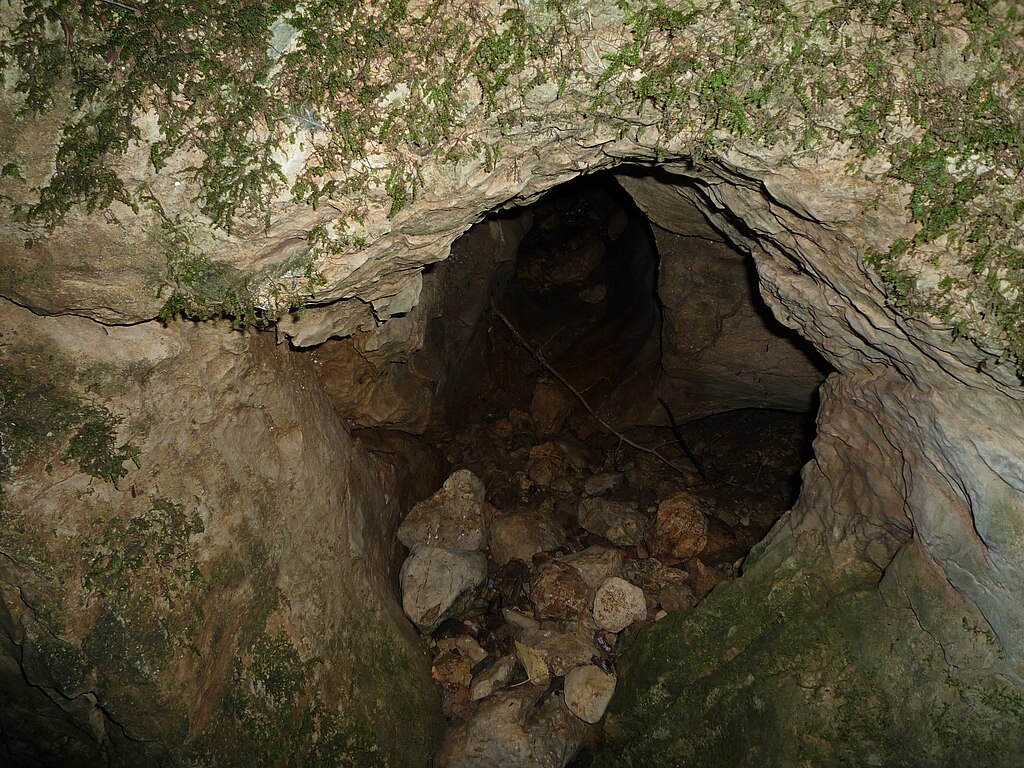
The cave also maintained habitable temperatures year-round. It was to the north of Motril. Aside from being 230 feet deep, the main chamber was 3,000 square feet with 40-foot ceilings.
She set her goal at 500 days, knowing she could stop at any time. Throughout the experience, Beatriz avoided dwelling on the potentially negative consequences of the significant isolation. She enacted safety limits for herself, though.
She also packed several outfits in varying fabrics to see how her skin reacted to underground air. She also added a toothbrush and unscented deodorant to her travel pack.
To solidify the sense of isolation, she did not bring a watch or many cameras. The only camera Beatriz brought along had the screen removed. She wanted to avoid seeing the time. It was to eliminate visual perception of herself, which also meant no mirrors or smartphones.
These precautions were there to greatly intensify the experience and keep her at a sustainable mental state. Her goal was also to remove the sense of time and its perception because that could increase anxiety.
In other settings with endurance athletes in caves, they would get daily food deliveries. To counter this, she instructed the monitoring team to follow an irregular pattern.
They would conduct food drops at random intervals, lasting up to 15 days. The intervals for collecting her waste would also be irregular. Her trainers strongly emphasised the need to establish a pattern of life in the cave, but Beatriz admitted it was quite difficult to do so.
ALSO READ: Mars500 Was a 520 Day Mock Mission to Mars That Revealed What Long Isolation Really Does to People
Scientists tracked Beatriz Flamini’s cave experiment for sleep, stress, and time sense
Academics in many fields were greatly interested in her idea. They wanted to collect data on the day-by-day progression of her physical and psychological state.
That entailed how her mental state remained under extreme pressure and whether the circadian rhythm would change during extended periods of living in darkness. These were subjects they were previously interested in, but having a voluntary test subject made it even better.
Julio Santiago, an experimental psychologist working in Granada, examined her temporal and spatial perceptions over time. He remarked that it was not easy to find someone who wanted to be isolated and disoriented in this way.
The researchers also set up tests to ensure a flat baseline before proceeding. Beatriz also met with a sports psychologist who gave her tips on spotting hallucinations to reduce the chances of self-harm or danger to others. Beatriz was also encouraged to voice her thoughts while in the cave to provide a greater sense of reality.
Beatriz also invited Dokumalia, a Spanish production company that produced outdoor adventure shows. Dokumalia sponsored her experience with two GoPro Cameras with the screens removed. Electricity was supplied by solar-charged batteries sent down the shaft with other items she would need.
In November 2021, Beatriz posted on Instagram that she would be in touch with everyone in April or May 2023. She put on a spelunking helmet and a large duffel bag. The opening of the cave was so small that Beatriz had to struggle to fit inside.
As she lowered herself down the opening, she looked up at the onlookers and stuck out her tongue, saying, “See you in just a night.”
Beatriz Flamini came out after 500 days with weight loss, calm confidence, and odd new senses
When she emerged from the cave, all of the baby fat was gone from her cheeks. She had also lost twelve pounds but did not appear to have any adverse psychological effects.
The first impression she gave about her 500-day stay was that it was a breeze. She described it as unbeatable. Beatriz had read dozens of books, knitted hats, exercised, and drawn pictures. To her, it was a staycation.
Doctors did tests to confirm her health after the stay. They found that Beatriz’s blood pressure, nutritional levels, and heart rhythm were all normal. The psychiatrists also concurred, which was quite a surprise considering many experts believed the experience would lead to severe trauma.
However, Beatriz did admit to having issues walking straight because of the time spent on terrain that did not allow normal walking. She also had issues with peripheral vision and had auditory hallucinations.
In an interview with First Person news, she indicated that the absence of sound allowed her brain to create its own. What she complained of most was insects and flies. They covered every opportunity.
Even in this harsh terrain, Beatriz felt the experience was extraordinary. When she came out, her senses had to re-adjust to the outside world. She missed the solitude and calm she felt inside.
However, scientists have told her that if she had extended the stay, her mind and body would have begun to break down. This was probably the point that made her return to the world above.
As a child, Beatriz carried a small notebook in which she wrote down things she needed to accomplish as a grown-up. One of the items on her bucket list was living in a cave. She rediscovered the notebook after embarking on her Timecave journey, and it thrilled Beatriz that she fulfilled a childhood dream.
What may have been arduous as an endurance activity was actually something Beatriz had adapted to quite well as a way of life. She is currently considering spending more time in solitude and may return for another cave staycation or a desert journey.