

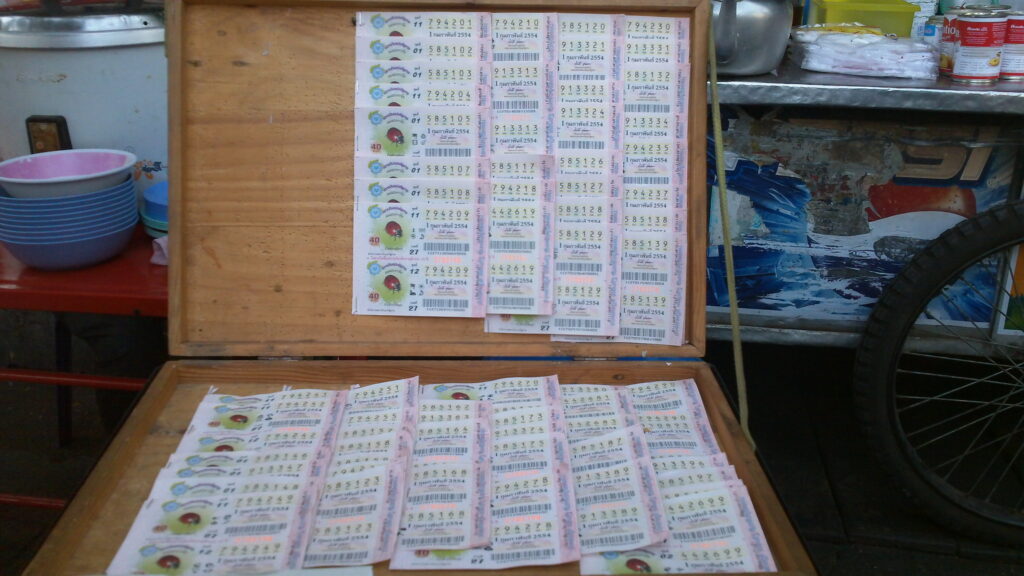
Americans spend $125 billion annually on lottery tickets. The odds of winning are astronomical – 1 in 300 million. It’s near-impossible to profit from lotteries, and yet a convenience store owner in a small town figured out how. Turns out the secret was in the maths.
Puzzling Origins
As a kid, Jerry Selbee was dyslexic. He’d struggle with simple reading assignments. But a standardised test revealed he could solve maths problems at the level of undergrads. He also had the ability to spot patterns where others saw only chaos. For years to come, his skills would remain unnoticed.
In his senior year, he married his high school sweetheart, Marjorie. Together they would spend a quiet life in Evart, Michigan – a small, rural town known for its serene streets, factory roots & close-knit community. Jerry’s career was similarly low-profile.
Chemist at a sewage-treatment plant, pharmaceutical salesman, computer operator, cereal packaging designer and finally, shift manager. In 1966, Jerry worked as a materials analyst at Kellogg’s. He’d design boxes to extend cereal’s shelf life.
“You ever buy a cereal that had a foil liner on the inside? That was one of my projects.” Jerry recalled. He’d even figured out how to track the exact production locations & timings of their competitors’ brands just from the serial numbers on the boxes.
Jerry’s intellectual appetite was insatiable. Along with work, he attended night classes at Kellogg’s Community College. He’d go on to earn a stack of degrees – An Associate’s Degree, a Bachelor’s in Mathematics & Business & an MBA. He’d also started a Master’s in Mathematics, but cut it short due to family responsibilities.
But this didn’t deter Jerry from his intellectual pursuits. He’d often involve his kids in his latest curiosity, taking them on expeditions. When he was interested in mushrooms, he went hunting for them in the forests. Once, when geology held his attention, he took them out looking for fossilised stones.
“Anything he jumps into, he jumps into one hundred per cent,” His eldest son, Doug, said, “He gets interested in string theory, and black holes, and all of a sudden you’re surrounded by all these Stephen Hawking books.” Once, Jerry had even bought some math textbooks to keep his skills sharp.
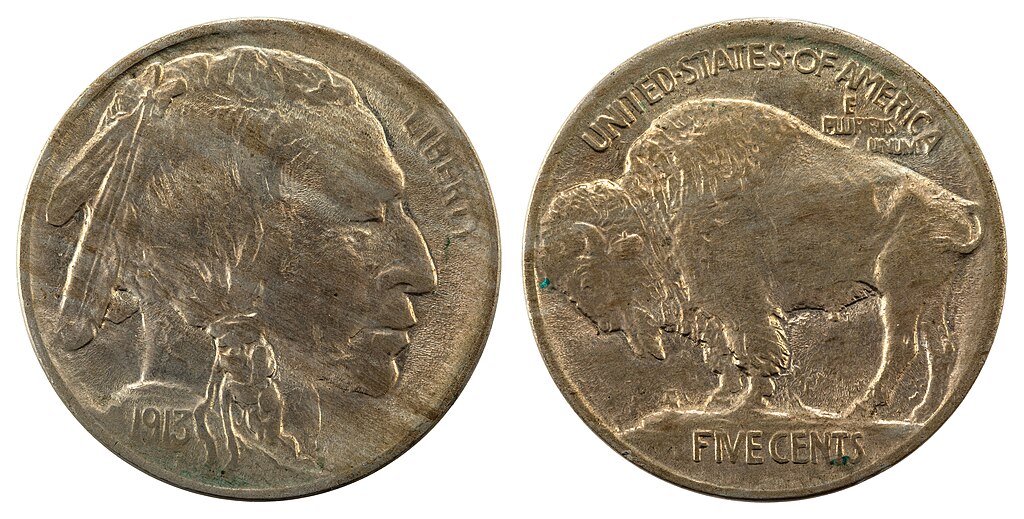
It was during this time that he made his first profit. In those days, people would collect their spare change into rolls and cash it in bulk at the bank. Jerry suspected that undiscerning bank customers might have ignorantly left some rare/valuable coins in these rolls.
So he bought these rolls from the bank at face value. Doug & Jerry would sit in front of the TV and search those rolls for buffalo nickels & mercury head dimes, making 6000$ in the process.
All the ingredients for Jerry’s lottery success were there – a knack for spotting opportunities in the mundane, a proven track record of making a profit & the willingness to put in diligent effort. All that remained was one life decision – the step that sent his life hurtling towards financial success.
ALSO READ: Rickrolling Was a 2007 Internet Joke That Turned Rick Astley Into a Meme Legend
Turning a ‘Corner’
In 1984, Jerry had grown tired of working for others. He wanted to start something on his own. At that time, the town was littered with ‘party’ stores – so-called because they mostly sold liquor and cigarettes. Labourers and workers from the factories would flock there in the evenings to buy beer or have a few smokes.
After looking at 32 stores, he chose one and bought The Corner Store on Main Street. It was part of Evart’s modest commercial district, where residents & factory workers regularly frequented. To make commuting easier, the Selbee family moved into a two-story house less than a mile from the store.
The store operated from 7 am to midnight. Jerry sold the liquor & cigarettes, while Marge handled the books and made the sandwiches. A year after taking over the store, Jerry got a lottery machine installed. It was the size of a cash register and would print tickets for the Michigan State Lottery.
It was the only machine in town, and one of the few in the county. He’d make $300,000 every year from selling tickets, out of which he’d pocket $20,000 as profit. This money helped them construct an additional section of the store and also fund their kids’ education.
Marge never got tempted to try the lottery herself. She disliked the risk, but Jerry found it interesting. He’d buy lottery tickets from time to time. Not in hopes of winning, but because he was curious about it as a phenomenon – set probabilities, rules and business opportunities mixed in together.
The Selbees operated the corner store for 15 years. In 2000, the couple decided to retire. “I was 62. Marge was 63. And I thought it was a nice time to sell and see what we could do after that.” Jerry said in an interview.
After retiring, Jerry would revisit the store from time to time. He’d catch up with customers, see how they were getting along. On one such morning in 2003, he saw a brochure for a new lottery game.
The Winfall Lottery
The Michigan Lottery had a game called Winfall. You’d choose 6 numbers at random from 1 to 49. If you matched all numbers, you’d get the jackpot. If you matched 5, 4, or 3 numbers, you’d still win, but for lesser amounts. Standard rules, but it had a gimmick.
If no one won the jackpot & the amount climbed above $5, it would be rolled down to the lower prize tiers, increasing the winning amounts for those dramatically. This roll-down happened every six weeks, and the Michigan Lottery would advertise it to attract more buyers.
Jerry calculated that there was a 1 in 54 chance of matching 3 numbers ($5 prize) and a 1 in 1,500 chance of matching 4 numbers ($100 prize). During a roll-down week, if no one won the jackpot, the prizes increased dramatically. $5 became $50, and $100 became $1000.
“The math involved is sixth-grade. It’s not a great science,” Jerry Selbee explained.
If a player bought his tickets during the roll-down week, a $1 investment would statistically yield him much more than $1. All Jerry had to do was buy 1,000 tickets, and he was guaranteed to achieve a good ROI.
The next time the Winfall Jackpot rose above $5 million, he drove to a lottery machine outside Evart to avoid suspicion. He bought $2,200 worth of tickets. After sorting through the tickets, his winnings totalled $2150. This setback didn’t deter him.
To achieve the result from his calculations, he needed to buy more tickets. The next time, he bought $3,400 worth of tickets and made $6,300. A whopping 46% profit margin. Encouraged by this result, he bet $8,000 in the next draw and made $15,700. A 49% margin!
Jerry was doing all of this under wraps. One day on a camping holiday, he decided to let his wife in on the secret. Marge had always been averse to playing the lottery, but she couldn’t argue with the results. Soon, they started playing as a team.
The couple developed a repeatable routine. Every time a roll-down was announced, they would drive 900 miles to Massachusetts. They’d buy 1,00,000 tickets – a daunting task that itself required several hours. And then they’d hole up in the Red Roof Inn, sorting the tickets.
That took 10 days, with 10 hours of work per day. During that time, they were buying about $4.2 million in tickets annually. Given the results, they weren’t afraid to put in the grunt work. After the winning numbers were announced, they stored their losing tickets in plastic totes in their barn.
The couple amassed over $18 million worth of losing tickets over the years. After they repeated their success, they even invited their kids to join in. The Michigan Lottery welcomed groups of bettors, so the family, together, collected $18,000 to invest.
Unfortunately, on that draw, someone hit the six-number jackpot, and the Selbees lost most of that amount. Jerry pushed to try again, and within two draws, they were profitable.
In June 2003, Jerry incorporated GS Investment Strategies LLC to manage the group. He sold shares of the company at $500 per share to 25 members, including his personal accountant, Steve Wood. After incorporating, the group played 12 roll-down weeks, earning upwards of $280,000 in profit.
In May 2005, the Michigan State Lottery shut down the game, citing declining ticket sales. Jerry was disappointed after his only constructive hobby during retirement was taken away. That didn’t last for long. A member of the lottery group informed him about the Massachusetts lottery’s Winfall game.
There were minor differences, but the maths worked out the same. So Jerry got the contact info for a party store owner there and drove out in August 2005. At that point, the Selbees didn’t know – there was an invisible adversary lurking on the horizon.
Selbee Family v/s MIT kids
James Harvey, a mathematics major in his final year at MIT, had recruited a group of 50 people to invest $20 each in the Massachusetts lottery. 500 tickets were bought for a total cost of $1000. In the February 7 roll-down, they won $3,000, taking home $2,000 in profit.
Later, Harvey, along with some classmates, incorporated Random Strategies LLC (named after his dorm) and started wagering about $600,000, using computers to pick numbers for their tickets. It was during this time that stores started to notice the unusually large number of tickets being printed.
A store manager even made a complaint. When lottery officials investigated, they even found 23 more stores violating the rules, but they were let off with a warning. That is why, when Jerry & Marge arrived and requested that store owners let them print tickets in bulk, they found no resistance.
By August 29, the Selbee Family had started playing the same lottery. They were placing larger & larger bets, one time putting in $720,000. The lottery officials didn’t mind what the Selbees were doing. They even sent compliance officers to check in on the Selbee operation from time to time.
The officers noted nothing out of the ordinary. The first time the two groups clashed was in 2010. In the Cash Winfall drawing of August 2010, a roll-down wasn’t announced. Harvey & company decided to force a roll-down by buying $1.4 million worth of tickets – enough to tip the jackpot over $2 million.
Other bettors didn’t know this would happen, so they hadn’t bought tickets. When Jerry heard about the forced roll-down, he was angry. According to Jerry, what he was doing was a system, while Harvey’s forced roll-down was manipulative. Next time, Jerry was prepared.
He suspected Harvey & gang would try the same strategy in the Christmas Roll Down. So when a contact alerted him of spikes in ticket sales in that area, he also bought 45,000 tickets. The Selbees made $200,000 in profits in that draw.
This rivalry didn’t last long. In 2011, word got out. An anonymous tip led to the end of the betting groups.
The Fall of Winfall
Andrea Estes, an investigative reporter with The Boston Globe, got an anonymous tip from a state employee. A year ago, she had exposed a child-abuse scandal in the catholic church as part of the famed Spotlight team (later made into an Oscar-winning film of the same name).
She pursued the Selbee Family & MIT students for answers, but all she got was suspicious silence or an inability to access. So she enquired with lottery officials, who acted as if they didn’t know what was going on. Estes was unstoppable. Her story was published on July 31st.
The article triggered a domino effect, travelling up the chain of power to the newly appointed state treasurer, Steven Grossman. He announced that the game would be phased out by 2012 & stores were limited to printing $5000 in tickets per day.
In January 2012, Jerry & Marge played Cash WinFall for the last time. In their 9-year run, they had netted around $7.5 million in profits. And because of such large betting groups, the game had added $120 million to the state treasury. The jury is still out on whether this kind of bulk-buying was ethical.
New Beginnings
Jerry maintains that he did nothing illegal. With their earnings, the Selbees went on to fund a new business venture: construction financing. Their lottery strategy & life inspired a film called Jerry & Marge Go Large, starring Bryan Cranston as Jerry. That’s a sure win!
James Harvey went on to join the tech industry. He worked at a few tech companies before founding his own startup, Float Cargo, which is trying to revive airships for the 21st Century. Harvey is also currently exploring AI applications for the food industry.
The Winfall Game was suspended & rules were tightened. Beth Breshnahan, the Marketing Director for the Massachusetts Lottery, would later go on to comment, “The integrity of the lottery is our priority. It’s critical to our success. We want people to know that when they play, they have the same chance of winning.”
Any unusual prize-winning immediately triggers rule changes, but for those who hustle, opportunities still exist. All it takes is a keen eye for detail & a knack for numbers, just like Jerry Selbee & his MIT counterparts.